- About Us
- Programs
- Research
- Pharmacy Events
- Students
- Congresses
- Spotlight
- Documents
- Contact

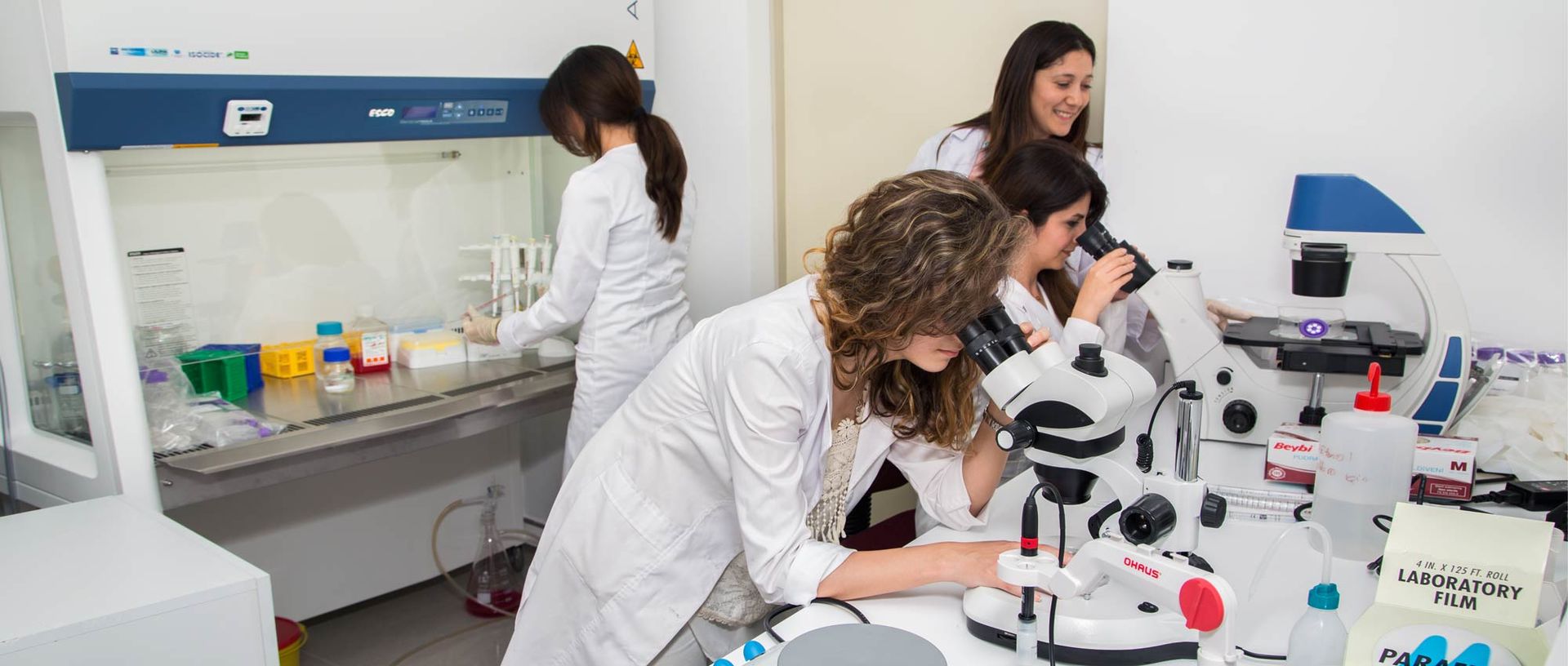
Eastern Mediterranean University Faculty of Pharmacy started offering education at the beginning of the 2011-2012 Academic Year. The medium of instruction is English in the 5-year program which is composed of 10 semesters excluding the English Preparatory School. The Faculty also offers a 6-year Pharm.D. program.
The fundamental mission of the Eastern Mediterranean University Pharmacy Faculty is to graduate qualified pharmacists and scientists who have conceived the principles and ethical concepts of pharmacy as a profession and who are equipped with high level fit-out at international standards to serve as first-step health advisors in the community. The Faculty also aims to contribute to the scientific research both locally and globally, to use the obtained knowledge for the benefit of the community and, last but not least, to become the best and the most respected faculty of pharmacy within our region by passing on knowledge necessary for obtaining employment in international drug industry and the other branches of this profession.
Our vision as Eastern Mediterranean University Faculty of Pharmacy is to grow qualified and conscientious professionals who work in line with universal criteria of pharmacy profession, show respect towards their profession, work towards the benefit of the society, possess analytical thinking and work effectively in a team in the scope of pharmaceutical sciences and community health.

ACPE: Accreditation Council for Pharmacy Education
https://www.acpe-accredit.org

PCN: Pharmacists Council of Nigeria
https://www.pcn.gov.ng
Putting considerable focus on laboratory applications, Eastern Mediterranean University Pharmacy Faculty consists of the following departments and units:
Department of Pharmacognosy and Pharmaceutical Botany Department – Department of Pharmacology - Department of Pharmaceutical Chemistry - Department of Pharmaceutical Toxicology - Department of Pharmaceutical Technology
During the 5-year program, in order to graduate, students are required to perform their internship practice in the areas of pharmacy, hospital pharmacy and industrial pharmacy for a minimum period of 6 months.
Having been designed in accordance with the program requirements and objectives, laboratories housed by EMU Pharmacy Faculty contain the latest technical and physical features and provide educational and research-related services. The labs can cater for 270 students at the same time. The program also offers an independent microscopy lab for students’ individual use. Each lab contains a smart board creating a productive educational environment for students.
Graduates of the program may work in pharmacies, hospitals, medicine industry, research and development laboratories, medicine and medical equipment companies and any other equivalent establishments. They may also work in the cosmetics industry, thanks to the in-depth information they received from courses on cosmetology.
Tel: +90 392 630 2401
Fax: +90 392 365 2819
E-mail: pharmacy@emu.edu.tr
Web: http://pharmacy.emu.edu.tr
You can use the links below or contact the faculty to get detailed information about the curriculum and the courses.
| Ref. | Course Code | Course Title | Lec. | Lab | Tut. | Credit | ECTS | Syl. | |
|---|---|---|---|---|---|---|---|---|---|
| Semester 1 | |||||||||
| J2111 | PHAR101 | Introduction to Pharmaceutical Sciences | 2 | - | - | 2 | 2 | ||
| J2112 | PHAR103 | Laboratory Safety in Pharmaceutical Practices | 1 | - | - | 1 | 1 | ||
| J2113 | CHEM105 | General Chemistry | 4 | 2 | - | 5 | 6 | ||
| J2114 | MATH155 | Mathematics | 3 | 1 | - | 3 | 4 | ||
| J2115 | PHYS111 | Principles of Physics | 2 | 2 | - | 3 | 4 | ||
| J2116 | ITEC107 | Computing for Pharmacy | 2 | 2 | - | 3 | 4 | ||
| J2117 | ENGL191 | Communication in English - I | 3 | 1 | - | 3 | 5 | ||
| J2117 | ENGL181 | Academic English - I | 5 | 1 | - | 3 | 5 | ||
| J2118 | TUSL181 | Turkish as a Second Language | 2 | - | - | 2 | 4 | ||
| J2118 | HIST280 | Atatürk's Principles and History of Turkish Reforms | 2 | - | - | 2 | 4 | ||
| Semester 2 | |||||||||
| J2121 | PHAR206 | Medical Terminology | 2 | - | - | 2 | 3 | ||
| J2122 | BIOL124 | Introduction to Molecular Biology and Genetics | 2 | 3 | - | 3 | 5 | ||
| J2123 | MATH212 | Biostatistics | 3 | - | 1 | 3 | 5 | ||
| J2124 | PSYC108 | Science of Psychology | 2 | - | - | 2 | 3 | ||
| J2125 | MDCN140 | First Aid and Medical Devices | 1 | 1 | - | 1 | 3 | ||
| J2126 | MDCN142 | Anatomy and Histology | 2 | 2 | - | 3 | 3 | ||
| J2127 | NUTD223 | Nutrition and Diet Treatment | 3 | - | - | 3 | 3 | ||
| J2128 | ENGL182 | Academic English - II | 5 | 1 | - | 3 | 5 | ||
| J2128 | ENGL192 | Communication in English - II | 3 | - | 1 | 3 | 5 | ||
| Semester 3 | |||||||||
| J2131 | PHAR241 | Pharmaceutical Microbiology - I | 3 | 2 | - | 4 | 5 | ||
| J2132 | PHAR247 | Pharmacy Management | 3 | - | - | 3 | 3 | ||
| J2133 | PHAR312 | Physical Pharmacy - I | 2 | - | - | 2 | 3 | ||
| J2134 | CHEM243 | Organic Chemistry - I | 4 | - | - | 4 | 6 | ||
| J2135 | CHEM247 | Analytical Chemistry - I | 3 | 2 | - | 4 | 6 | ||
| J2136 | MDCN243 | Public Health | 2 | - | - | 2 | 2 | ||
| J2137 | MDCN245 | Physiology - I | 4 | - | - | 4 | 5 | ||
| Semester 4 | |||||||||
| J2141 | PHAR204 | Pharmaceutical Botany | 2 | 2 | - | 3 | 3 | ||
| J2142 | PHAR242 | Pharmaceutical Microbiology - II | 3 | 2 | - | 4 | 5 | ||
| J2143 | CHEM246 | Organic Chemistry - II | 3 | 2 | - | 4 | 4 | ||
| J2144 | CHEM254 | Biochemistry | 2 | 2 | - | 3 | 4 | ||
| J2145 | BIOL412 | Immunology | 3 | 3 | - | 4 | 4 | ||
| J2146 | MDCN144 | Pathology | 2 | - | - | 2 | 2 | ||
| J2147 | MDCN244 | Physiology - II | 3 | 2 | - | 4 | 4 | ||
| J2148 | CHEM248 | Analytical Chemistry - II | 3 | 1 | - | 3 | 4 | ||
| Semester 5 | |||||||||
| J2151 | PHAR301 | Pharmacology - I | 3 | - | - | 3 | 4 | ||
| J2152 | PHAR333 | Pharmaceutical Chemistry - I | 3 | 2 | - | 4 | 5 | ||
| J2153 | PHAR315 | Pharmacognosy - I | 3 | 2 | - | 4 | 5 | ||
| J2154 | PHAR307 | Pharmaceutical Technology - I | 3 | 2 | - | 4 | 5 | ||
| J2155 | PHAR309 | Pharmaceutical Biotechnology and Cell Culture | 4 | - | - | 4 | 6 | ||
| J2156 | PHAR311 | History and Ethics of Pharmacy | 1 | - | - | 1 | 1 | ||
| J2157 | PHAR313 | Occupational Health and Safety in Pharmaceutical Practices | 1 | - | - | 1 | 1 | ||
| J2158 | PHAR317 | Simulations in Pharmacy Practices | 1 | - | - | 1 | 3 | ||
| Semester 6 | |||||||||
| J2161 | PHAR302 | Pharmacology - II | 3 | - | - | 3 | 4 | ||
| J2162 | PHAR308 | Pharmaceutical Technology - II | 3 | 3 | - | 4 | 5 | ||
| J2163 | PHAR310 | Pharmacoeconomics | 3 | - | - | 3 | 3 | ||
| J2164 | PHAR314 | Financial Analysis in Pharmacy Practice | 3 | - | - | 3 | 3 | ||
| J2165 | PHAR316 | Rational Drug Use | 1 | - | - | 1 | 1 | ||
| J2166 | PHAR318 | Pharmacognosy - II | 3 | 2 | - | 4 | 5 | ||
| J2167 | PHAR334 | Pharmaceutical Chemistry - II | 3 | 2 | - | 4 | 5 | ||
| J2168 | UE01 | University Elective - I | 3 | - | - | 3 | 4 | ||
| Semester 7 | |||||||||
| J2171 | PHAR439 | Pharmacology - III | 3 | - | - | 3 | 4 | ||
| J2172 | PHAR435 | Pharmaceutical Chemistry - III | 3 | 2 | - | 4 | 5 | ||
| J2173 | PHAR433 | Pharmacognosy - III | 3 | 2 | - | 4 | 5 | ||
| J2174 | PHAR437 | Pharmaceutical Technology - III | 3 | 2 | - | 4 | 5 | ||
| J2175 | PHAR409 | Pharmaceutical Toxicology | 3 | 2 | - | 4 | 4 | ||
| J2176 | PHAR441 | Pharmacotherapy - I | 4 | - | - | 4 | 3 | ||
| J2177 | PHAR470 | Hospital Pharmacy Applications | 1 | - | - | 1 | 2 | ||
| J2178 | PHAR400 | Community Pharmacy Applications | 1 | - | - | 1 | 2 | ||
| Semester 8 | |||||||||
| J2181 | PHAR442 | Cosmetics Science | 3 | - | - | 3 | 3 | ||
| J2182 | PHAR432 | Phytotherapy | 3 | - | - | 3 | 3 | ||
| J2183 | PHAR446 | Pharmaceutical Chemistry - IV | 3 | 2 | - | 4 | 5 | ||
| J2184 | PHAR448 | Pharmaceutical Technology - IV | 3 | 3 | - | 4 | 5 | ||
| J2185 | PHAR440 | Clinical Biochemistry | 3 | - | - | 3 | 4 | ||
| J2186 | PHAR412 | Pharmacotherapy - II | 3 | - | - | 3 | 5 | ||
| J2187 | PHAR468 | Artificial Intelligence Applications in Pharmacy | 1 | - | - | 1 | 1 | ||
| J2188 | PHAR414 | Physical Pharmacy - II | 2 | - | - | 2 | 4 | ||
| Semester 9 | |||||||||
| J2191 | PHAR451 | Thesis Project - I | - | 4 | - | 2 | 3 | ||
| J2192 | PHAR455 | Biopharmacy and Pharmacokinetics | 3 | - | - | 3 | 4 | ||
| J2193 | PHAR467 | Microbial Control of Pharmaceuticals | 3 | - | - | 3 | 4 | ||
| J2194 | PHAR469 | Physicochemical Control of Pharmaceuticals | 3 | - | - | 3 | 4 | ||
| J2195 | PHAR478 | Clinical Pharmacy | 3 | - | - | 3 | 3 | ||
| J2196 | PHAR460 | Industry Pharmacy Applications | 1 | - | - | 1 | 3 | ||
| J2197 | AE01 | Area Elective - I | 3 | - | - | 3 | 5 | ||
| J2198 | UE02 | University Elective - II | 3 | - | - | 3 | 4 | ||
| Semester 10 | |||||||||
| J21A1 | PHAR452 | Thesis Project - II | - | 6 | - | 3 | 6 | ||
| J21A2 | PHAR454 | Intoxication Control | 2 | - | - | 2 | 4 | ||
| J21A3 | PHAR456 | Biological Products | 2 | - | - | 2 | 4 | ||
| J21A4 | PHAR458 | Instrumental Analytical Methods | 3 | 1 | - | 3 | 6 | ||
| J21A5 | PHAR434 | Pharmaceutical Care | 1 | - | - | 1 | 1 | ||
| J21A6 | PHAR438 | Industrial Drug Sysnthesis | 3 | - | - | 3 | 4 | ||
| J21A7 | AE02 | Area Elective - II | 3 | - | - | 3 | 5 | ||
| Semester 11 | |||||||||
| J21B1 | PHAR453 | Thesis Project - III | - | 6 | - | 3 | 6 | ||
| J21B2 | PHAR436 | Hospital Pharmacy Practice Experience | - | 4 | - | 2 | 8 | ||
| J21B3 | PHAR462 | Pharmacy Practice | - | 4 | - | 2 | 8 | ||
| J21B4 | PHAR463 | Industrial Practice Experience | - | 4 | - | 2 | 8 | ||
| J21F1 | ECZ001 | . | 3 | - | - | 3 | 5 | ||
| J21F2 | ECZ002 | . | 3 | - | - | 3 | 5 | ||
| J21F3 | ECZ003 | . | 3 | - | - | 3 | 5 | ||
| Semester 12 | |||||||||
| J21C1 | PHAR464 | Pharmacy Practice Clerkship | - | 12 | - | 6 | 10 | ||
| J21C2 | PHAR466 | Industrial Pharmaceutical Clerkship | - | - | - | - | 10 | ||
| J21C3 | PHAR465 | Hospital Pharmacy Clerkship | - | 4 | - | 2 | 10 | ||

Online application system for international students and TRNC citizens with GCE scores.
1. Collaborate effectively with health professionals and other stakeholders while collecting and interpreting data to ensure
a team approach to care.
2. Demonstrate knowledge and apply concepts in pharmaceutical sciences.
3. Identify and analyze pharmaceutical problems, propose solutions, and develop evidence-based treatment plans using
patient and population data.
4. Communicate knowledge scientifically (oral, written, visual) and provide drug information and counseling to patients,
families, and health care providers.
5. Plan, manage, and evaluate project-based work, including population-specific, evidence-based disease management
programs and protocols based on epidemiologic and pharmacoeconomic data.
6. Demonstrate awareness of and apply ethical responsibilities; carry out duties in accordance with legal, ethical,
social, economic, and professional guidelines.
7. Explain and evaluate current health and therapeutic problems; promote the availability of effective health and disease
prevention services through population-specific data, quality improvement, and research.
8. Use computer programs, digital technologies, and informatics resources in practice; demonstrate expertise in informatics.
9. Apply quality management procedures and participate in quality processes, including medication
use systems, safety, error reduction, and health policy development.
10. Interpret and comply with laws, regulations, and ethical codes.
11. Exhibit professional identity and role model behaviors.
12. Differentiate physiological functions of healthy vs. unhealthy individuals.
13. Engage in continuous professional development (CPD); maintain professional competence by
identifying and analyzing emerging issues, products, and services.
14. Communicate effectively in oral and written form.
15. Critically evaluate and integrate advanced pharmacy knowledge.
16. Conduct independent studies.
17. Access, interpret, and synthesize scientific information from literature and databases.
18. Manage human, physical, medical, informational, and technological resources to ensure efficient,
cost-effective use in patient care.
19. Apply knowledge of pharmacokinetics to perform calculations.
20. Demonstrate knowledge of pharmacokinetic changes in specific patient populations.
21. Apply evidence-based knowledge of pharmacology, pharmacotherapy, and clinical pharmacy to
make pro-active contribution to effective use of medications and devices.
22. Develop drug formulation and preformulation studies to select the most suitable dosage form
for the active ingredient (Apply knowledge from physical pharmacy courses).
23. Demonstrate the ability to perform sterility assurance level testing in hospital and industry setting.
24. Apply aseptic techniques, microbiological monitoring, anti-microbial effectiveness tests, and endotoxic detection
tests to ensure product and patient safety.
25. Apply sterile and non-sterile quality control of drugs.
26. Interpretation of laboratory, diagnostic, and pharmacologic data and participating in team-based decision-making
for individual’s thereatment regimen.
27. Develop a knowledge of Good Manufacturing Practice (GMP), Good Clinical Practice (GCP), and regulatory guidelines.
28. Demonstrate leadership/professionalism in clinical and industrial environments.
29. Demonstrate effective participation in interprofessional skills during clinical and industry trainings,
and community pharmacy settings.

Faculty of Pharmacy
99628, Famagusta, North Cyprus
via Mersin 10, Turkiye